
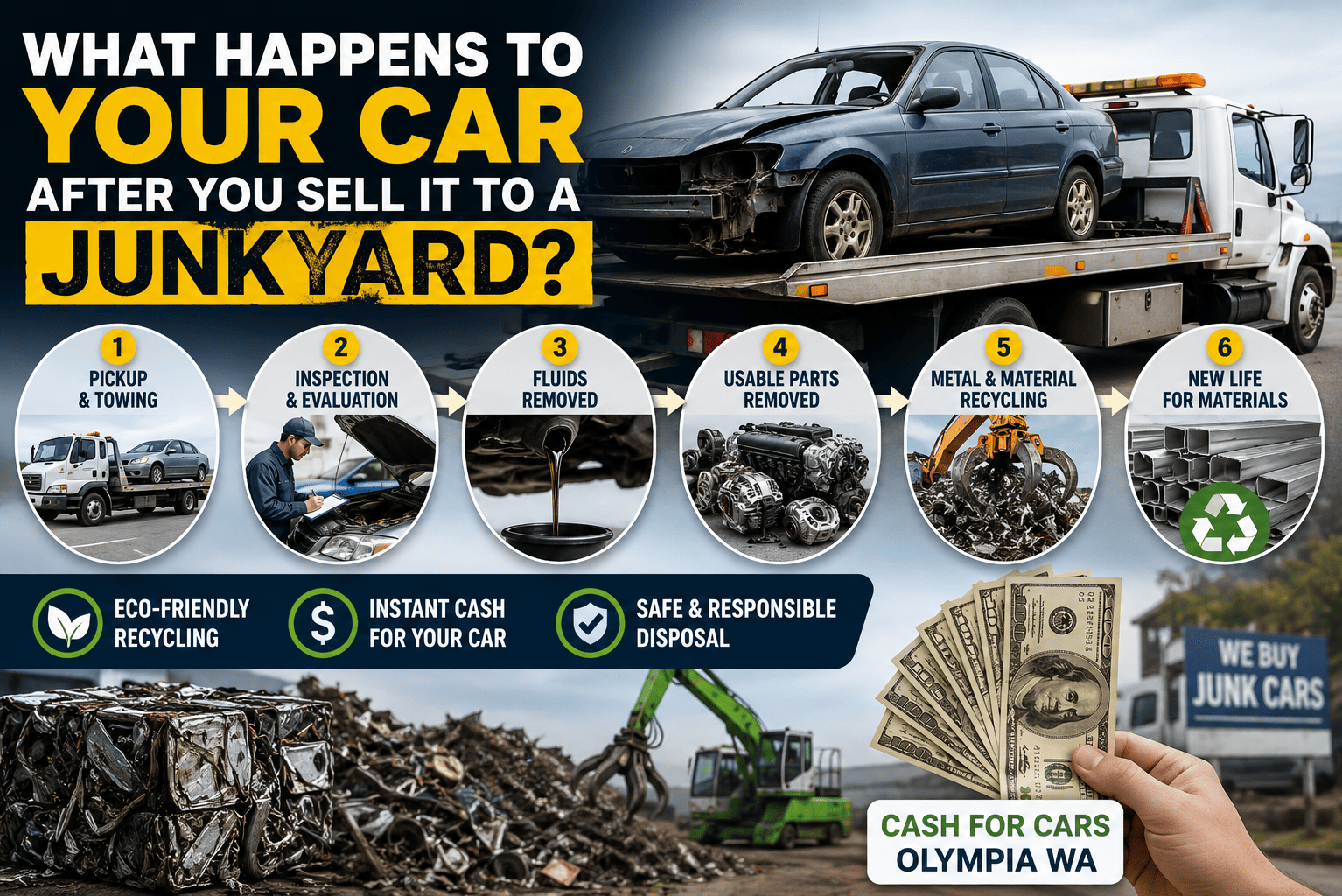
Discover what happens after you sell your vehicle to a junkyard. Learn how cars are dismantled, recycled, and processed while getting cash for cars Olympia WA.
Have you ever wondered what actually happens after the tow truck picks up your old vehicle? Many car owners assume their vehicle is immediately crushed and turned into scrap metal. In reality, the process is much more detailed, and every vehicle goes through several important steps before it reaches its final destination.
Whether your car has been sitting in your driveway for years, has mechanical problems, or has been involved in an accident, selling it to a professional junk car buyer is often the easiest way to free up space while earning money. If you're searching for cash for cars Olympia WA, understanding what happens behind the scenes can help you feel confident about your decision.
Here's a complete look at the journey your vehicle takes after you sell it.
Step 1: Your Vehicle Is Picked Up
The first step is straightforward. Once you accept an offer, the junk car company schedules a pickup at a convenient time. Most reputable companies provide free towing, meaning you don't have to worry about arranging transportation yourself.
The driver will typically:
- Verify ownership documents
- Confirm the vehicle matches the quoted information
- Complete any required paperwork
- Pay you before loading the vehicle
Companies like Olympia Cash For Junk Cars make this process simple by offering same-day or next-day pickup throughout the Olympia area.
Step 2: The Vehicle Is Inspected
After arriving at the salvage yard, your vehicle receives a detailed inspection.
Technicians evaluate:
- Engine condition
- Transmission
- Battery
- Wheels and tires
- Catalytic converter
- Electronics
- Interior components
- Body panels
- Glass
- Suspension
This inspection determines whether certain parts can be reused, refurbished, or recycled.
Even vehicles that appear completely worn out often contain valuable components.
Step 3: Hazardous Fluids Are Safely Removed
Before any dismantling begins, all hazardous materials must be removed.
These include:
- Engine oil
- Transmission fluid
- Brake fluid
- Coolant
- Power steering fluid
- Gasoline
- Windshield washer fluid
- Air conditioning refrigerant
Professional junkyards follow environmental regulations to dispose of or recycle these fluids safely.
This prevents contamination of soil and groundwater while protecting the environment.
Step 4: Valuable Parts Are Removed
This is one of the most important stages.
Many vehicles still contain parts that are in excellent working condition, even if the car itself no longer runs.
Commonly salvaged parts include:
- Alternators
- Starters
- Radiators
- Engines
- Transmissions
- Doors
- Mirrors
- Headlights
- Tail lights
- Wheels
- Tires
- Seats
- Navigation systems
- Airbags
- Window motors
- Control modules
These parts are cleaned, tested, and sold as affordable replacements for other vehicle owners.
This helps reduce waste while lowering repair costs for consumers.
Step 5: The Catalytic Converter Is Recovered
One of the most valuable components on many older vehicles is the catalytic converter.
It contains precious metals such as:
- Platinum
- Palladium
- Rhodium
These metals can be recovered and reused in manufacturing.
Because of their value, catalytic converters are carefully removed before the vehicle is processed further.
Step 6: Batteries Are Recycled
Vehicle batteries contain lead and acid that require proper handling.
Instead of being discarded, batteries are sent to recycling facilities where:
- Lead is recovered
- Plastic cases are reused
- Acid is neutralized
- New batteries are manufactured using recycled materials
Battery recycling keeps hazardous materials out of landfills.
Step 7: Tires May Get a Second Life
If the tires still have good tread, they may be resold.
Otherwise, worn tires can be recycled into products like:
- Playground surfaces
- Rubber mulch
- Athletic tracks
- Road construction materials
- Industrial fuel
Very little goes to waste.
Step 8: Usable Metal Is Recycled
After reusable parts have been removed, the remaining shell is sent for crushing.
The vehicle is shredded into small pieces.
Large magnets separate steel from other materials.
Additional equipment sorts:
- Aluminum
- Copper
- Stainless steel
- Brass
These recycled metals become raw materials for manufacturing.
Your old vehicle may eventually become:
- New cars
- Building materials
- Household appliances
- Construction equipment
- Steel beams
- Industrial machinery
Automotive recycling helps reduce the need for mining new metals.
Step 9: Plastic and Glass Are Processed
Modern vehicles contain significant amounts of plastic.
Many components can be recycled, including:
- Bumpers
- Interior trim
- Dashboard panels
- Fluid reservoirs
Glass from windshields and windows may also be processed into new glass products or construction materials.
Step 10: Nothing Valuable Goes to Waste
Today's salvage industry focuses on maximizing every vehicle's value.
A typical junk vehicle can have up to 80–90% of its materials recovered through recycling or reuse.
That means your unwanted car continues providing value long after you've sold it.
Why Junkyards Prefer Recycling Instead of Crushing Immediately
Many people imagine junkyards simply crushing every vehicle that arrives.
In reality, crushing is usually the final step.
Selling reusable parts often generates more value than selling scrap metal alone.
Professional salvage yards carefully recover everything they can before recycling the remaining metal.
This approach benefits:
- Customers
- Repair shops
- Manufacturers
- The environment
Environmental Benefits of Selling Your Junk Car
Selling your unwanted vehicle isn't just financially rewarding-it also supports sustainable recycling practices.
Benefits include:
Less Landfill Waste
Recycling keeps millions of tons of automotive materials out of landfills every year.
Lower Energy Consumption
Producing steel from recycled metal uses significantly less energy than mining and refining new ore.
Reduced Pollution
Proper disposal of fluids prevents contamination of waterways and soil.
Conserved Natural Resources
Reusing metals and parts reduces demand for raw materials.
Choosing the Right Junk Car Buyer
Not every junk car company follows responsible recycling practices.
Before selling your vehicle, look for a buyer that offers:
- Free vehicle pickup
- Instant quotes
- No hidden towing fees
- Fair pricing
- Licensed operations
- Environmentally responsible recycling
- Fast payment
- Friendly customer service
If you're searching for cash for cars Olympia WA, working with a trusted local company ensures a smoother experience from pickup to recycling.
Many local sellers choose Olympia Cash For Junk Cars because of their transparent pricing, quick service, and hassle-free vehicle removal. Businesses such as town auto olympia may also be familiar names in the local automotive market, but comparing offers can help you secure the best value for your vehicle.
Final Thoughts
Your vehicle's journey doesn't end when the tow truck drives away. Instead, it begins a carefully managed recycling process designed to recover valuable parts, safely dispose of hazardous materials, and recycle metals for future use.
From reusable engines and transmissions to recyclable steel and aluminum, nearly every part of your old car can serve a new purpose. By choosing a reliable local buyer, you not only receive fair compensation but also contribute to a cleaner environment and a more sustainable automotive industry.
If you're ready to clear space in your driveway and earn cash for cars Olympia WA, partnering with Olympia Cash For Junk Cars ensures your vehicle is handled responsibly while making the selling process quick, convenient, and rewarding.