
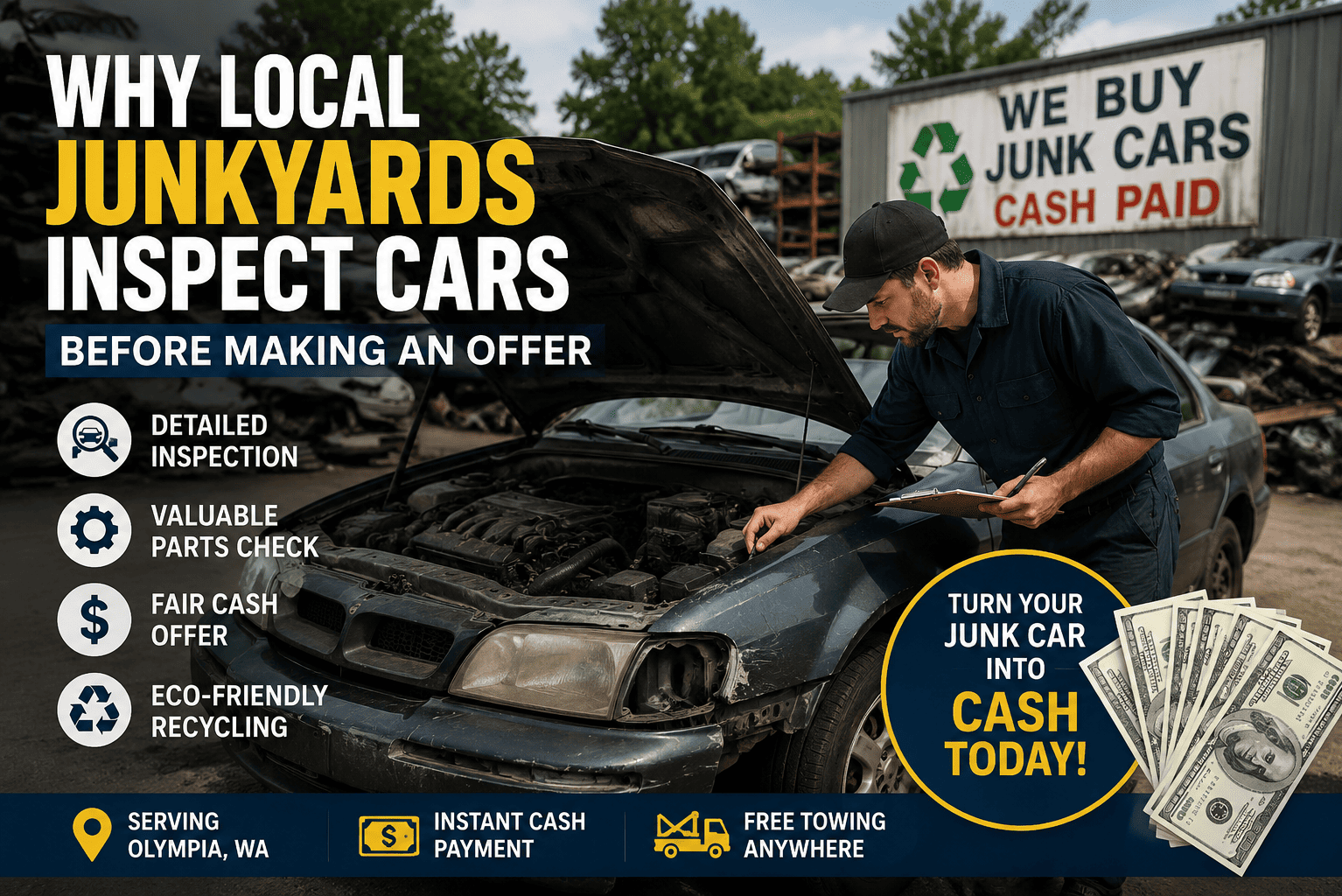
Planning to buy junk cars in Olympia or sell an old vehicle? Learn how inspections affect pricing, reusable parts, scrap value, and the final cash offer.
Planning on buying Olympia junk cars services, or on your way to sell unwanted auto? The thought might go into the back of your head why does Olympia junk yards would want to examine their buyable cars earlier before writing a price on a check, isn’t it an object? Perhaps each junk car is treated like others because each one of them is no longer driveable, right?.
A professional inspection allows buyers to accurately evaluate your vehicle based on its condition, reusable parts, metal weight, documentation, and current scrap market prices. Whether your vehicle has been involved in an accident, has mechanical problems, or has simply reached the end of its life, a proper inspection ensures you receive a fair and competitive offer.
Why Junk Car Buyers Don't Offer the Same Price for Every Vehicle
No two junk vehicles have identical value-even if they share the same make, model, and year. Experienced buyers carefully inspect each vehicle before determining its worth.
During the inspection, buyers evaluate factors such as:
- Vehicle make and model
- Year of manufacture
- Engine condition
- Transmission type
- Vehicle mileage
- Accident history
- Rust and corrosion
- Missing or damaged parts
- Tire condition
- Total vehicle weight
- Current scrap metal prices
A vehicle with reusable components or valuable replacement parts typically receives a higher offer than one that has been heavily stripped or severely damaged.
Engine Condition Plays a Major Role
The engine is one of the first components inspectors examine. Even if the vehicle no longer starts, many engine parts may still have resale value.
Inspectors generally check for:
- Visible damage or cracks
- Missing engine components
- Oil leaks
- Signs of overheating
- Overall engine completeness
Certain engines, especially those commonly found in imported vehicles, often retain higher value because replacement engines are expensive.
The Transmission Can Increase Your Offer
Both automatic and manual transmissions can significantly affect your vehicle's value. Buyers inspect the transmission to determine whether it can be rebuilt, repaired, or sold as a replacement part.
They typically evaluate:
- Physical condition
- Signs of damage
- Repair potential
- Resale value
Body Condition and Structural Damage Matter
Body damage is another important factor during the inspection. Minor dents may have little impact, but severe frame damage or extensive rust can reduce the vehicle's value.
Inspectors evaluate:
- Frame integrity
- Door panels
- Hood
- Bumpers
- Roof
- Trunk
- Chassis condition
- Rust and corrosion
Vehicles with cleaner body panels often have more reusable components, increasing their overall value.
Valuable Parts Can Boost Your Vehicle's Worth
Modern vehicles contain numerous components that can be refurbished or resold. These parts often contribute significantly to the final offer.
Examples include:
- Alternator
- Starter motor
- Transmission
- Catalytic converter
- Wheels and alloy rims
- Airbags
- Electronic control modules
- GPS and infotainment systems
- Sensors and wiring harnesses
Catalytic Converters Often Carry High Value
One of the most valuable components on many junk vehicles is the catalytic converter. It contains precious metals such as:
- Platinum
- Palladium
- Rhodium
The value depends on current market prices, the converter's condition, and whether it is the original factory-installed unit.
Vehicle Weight Affects Scrap Value
Even if your vehicle has few reusable parts, it still contains valuable recyclable metals.
Inspectors estimate the amount of:
- Steel
- Aluminum
- Cast iron
- Copper
Larger vehicles like SUVs, pickup trucks, and commercial vehicles generally contain more recyclable material, resulting in higher scrap value.
Mileage Helps Estimate Remaining Part Life
Vehicle mileage provides insight into how much wear major components have experienced.
Lower-mileage vehicles often receive better offers because parts such as the engine and transmission may still have considerable service life remaining.
Missing Parts Can Reduce Your Offer
Some vehicle owners remove valuable components before selling their junk cars. While this may seem profitable, it often reduces the overall value offered by the buyer.
Commonly removed parts include:
- Battery
- Catalytic converter
- Transmission
- Wheels
- Alternator
Leaving these components installed generally results in a higher overall offer.
Proof of Ownership Is Required
Professional junk car buyers verify ownership before completing a purchase. This protects both the seller and the buyer from legal issues.
You may be asked to provide:
- Vehicle title
- Vehicle registration
- Government-issued photo identification
Having these documents ready can speed up the selling process.
Current Scrap Metal Prices Influence Every Offer
Scrap metal prices change frequently based on market demand. As a result, the amount offered for your junk vehicle today may differ from the amount offered several weeks later.
Factors affecting pricing include:
- Steel market prices
- Fuel costs
- Transportation expenses
- Demand for recycled metals
- Overall recycling market conditions
Environmental Recycling Costs Are Also Considered
Reputable junk car buyers follow environmentally responsible recycling practices before dismantling a vehicle.
This includes:
- Removing engine oil and fluids
- Proper coolant disposal
- Battery recycling
- Safe handling of hazardous materials
- Recycling usable components
The cost of environmentally compliant recycling is one of the many factors considered when determining your vehicle's value.
Modern Buyers Use Digital Valuation Tools
Many professional junk car companies now use specialized software to assist with pricing.
These systems compare:
- Current market demand
- Available inventory
- Part resale value
- Scrap metal prices
- Vehicle-specific information
This technology helps buyers provide accurate and competitive offers.
How to Prepare Before the Inspection
If you're planning to sell your junk vehicle, taking a few simple steps beforehand can make the inspection process smoother.
- Remove all personal belongings.
- Gather your vehicle title and registration.
- Have maintenance records available if possible.
- Remove your license plates if required under Washington State regulations.
- Leave valuable components like the catalytic converter installed whenever possible.
- Be honest about the vehicle's condition.
Why Professional Inspections Benefit Sellers
A professional inspection ensures your vehicle is evaluated based on its actual condition rather than using a standard flat-rate estimate. Experienced buyers consider reusable parts, recyclable materials, and current market conditions to provide a fair offer.
This detailed process helps prevent your vehicle from being undervalued and gives you confidence that you're receiving competitive compensation.
Final Thoughts
Understanding how junk car buyers determine vehicle value helps you prepare for the selling process and maximize your payout. Every vehicle is unique, and a professional inspection considers everything from engine condition and valuable components to scrap metal prices and environmental recycling costs.
If you're planning to sell your unwanted vehicle, choosing a reputable junk car buyer that offers transparent inspections, fair pricing, environmentally responsible recycling, and professional customer service can make the entire experience simple and rewarding.